
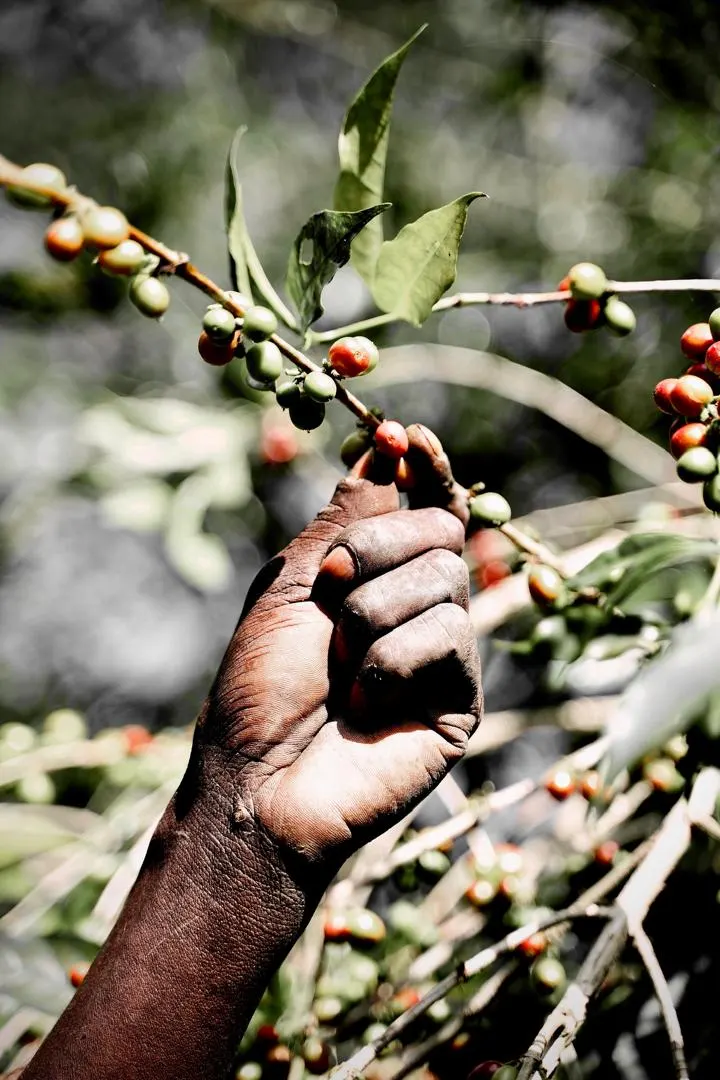
Ethiopia, birthplace of Arabica coffee
Coffea arabica originated in the forests of south-west Ethiopia, in the areas now known as Jimma, Kaffa and Limmu. Ethiopia is Africa's largest coffee producer and one of the world's top coffee exporters. Most Ethiopian coffee is grown by smallholders under forest or garden shade, with thousands of local heirloom varieties. That genetic diversity is why Ethiopian coffee offers a wider range of flavours than any other origin.
Ethiopian coffee regions
Ethiopian coffee is sold by region, and each region has a recognisable cup:
- Limmu (Jimma Zone): washed coffees, floral, citrus and wine-like, beautifully balanced.
- Jimma: mostly naturals, fruity and full-bodied; one of the largest coffee areas.
- Yirgacheffe (Gedeo): world-famous washed coffees with jasmine, bergamot and lemon.
- Sidama: bright, sweet and berry-like, washed and natural.
- Guji: intense fruit, peach and berry, prized naturals.
- Harar (eastern Ethiopia): dry-processed, blueberry, mocha and spice.
- Lekempti / Nekemte (western Ethiopia): fruity, spicy naturals.
- Kaffa, Bench Maji, Teppi: forest coffees from the south-west, sweet and earthy.
Gulifa leads with Limmu and Jimma from our own farm, and supplies every Ethiopian region to order.
Washed vs natural coffee
Washed (wet-processed) coffee is pulped, fermented and washed before drying. It tastes clean, bright and floral. Natural (unwashed, dry-processed) coffee dries inside the whole cherry, which gives a sweeter, fruitier cup with heavier body. Ethiopia also produces honey and experimental processes such as anaerobic naturals for specialty buyers.
Ethiopian coffee grades
The Ethiopian Coffee and Tea Authority (ECTA) grades export coffee from Grade 1 to Grade 5 (and lower grades for local use) by counting defects in a 300 g sample and cupping it. Grades 1 and 2 are specialty and premium; Grades 3, 4 and 5 are commercial grades used for blends and price-led markets.
| Grade | Class | Notes |
|---|---|---|
| Grade 1 | Specialty | 0 to 3 defects per 300 g; top specialty lots, cup 85+ |
| Grade 2 | Specialty / premium | 4 to 12 defects; clean, high-scoring washed coffees such as Limmu G1 and G2 |
| Grade 3 | Premium commercial | 13 to 25 defects; good naturals and washed coffees |
| Grade 4 | Commercial | 26 to 45 defects; most export naturals, such as Jimma naturals |
| Grade 5 | Commercial | 46 to 90 defects; blending and price-led markets |
Harvest and shipment calendar
The main Ethiopian harvest runs from October to January. Washed coffees reach export from about December and ship through to August. Naturals take longer to dry and process, and Gulifa ships Jimma naturals all year round.
How to import coffee from Ethiopia
- Choose a licensed exporter with an ECTA Certificate of Competence and, if you need them, organic certificates and EUDR data.
- Agree the coffee: region, process, grade, crop year, volume and packing.
- Approve samples: an offer sample first, then a pre-shipment sample that must match.
- Agree price and terms: usually a fixed price or a differential to the New York "C" market, with payment by Letter of Credit (LC) or Cash Against Documents (CAD).
- Export and shipping: the lot passes ECTA quality inspection and ships through the port of Djibouti with the certificate of origin, phytosanitary certificate, ECTA quality certificate and any organic transaction certificate.
Frequently asked questions
Why is Ethiopian coffee so famous?
Ethiopia is the birthplace of Arabica coffee. Thousands of heirloom varieties grow in its highlands, giving Ethiopian coffee unusually wide flavours, from jasmine and lemon in Yirgacheffe to blueberry in Harar and rich fruit in Jimma.
How do I import green coffee from Ethiopia?
Choose a licensed Ethiopian exporter, agree the coffee, grade, volume, price and payment terms (usually LC or CAD), approve an offer sample, then the exporter prepares the lot, passes ECTA inspection and ships from Djibouti with the export documents.
What is the difference between washed and natural Ethiopian coffee?
Washed coffee has the fruit removed before drying, giving a clean, bright, floral cup. Natural coffee dries inside the whole cherry, giving a sweeter, fruitier cup with more body.
What is the best Ethiopian coffee grade?
Grade 1 has the fewest defects and the highest cup scores, followed by Grade 2. Grades 3 to 5 are commercial grades used for blends and price-led markets. The best grade depends on your market and price.
Ready to source? Request an offer from Gulifa →